Seamless Pattern of Fried Egg: A Versatile Design for Creative Projects
The Seamless Pattern of Fried Egg is a unique and adaptable design that brings a playful yet elegant aesthetic to a wide range of creative applications. Whether you're designing scrapbook pages, crafting greeting cards, or working on digital backgrounds, this pattern offers a fresh approach to visual storytelling. Its versatility makes it an ideal choice for professionals and hobbyists alike who are looking to enhance their projects with a touch of whimsy and sophistication.
Understanding the Seamless Pattern of Fried Egg
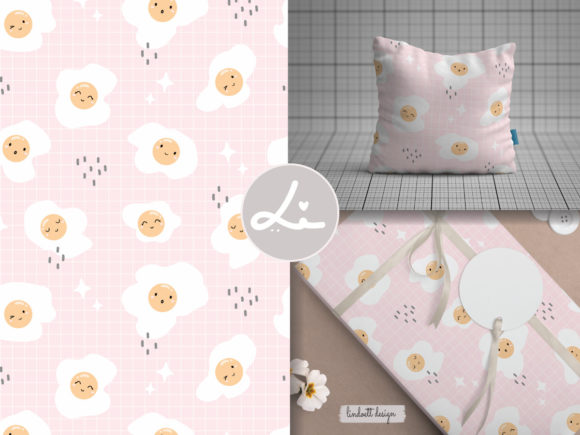
The Seamless Pattern of Fried Egg features a repeating motif of fried eggs arranged in a way that creates a continuous, uninterrupted design. This seamless nature ensures that when tiled, the pattern flows smoothly without visible seams or breaks. The design is available in various formats, including EPS and JPG files, making it compatible with both vector and raster-based editing software. The inclusion of layered AI files allows for easy customization, enabling users to modify colors, sizes, and other elements to suit their specific needs.
One of the standout features of this pattern is its ability to be pre-sized and edited within Adobe Illustrator. This flexibility means that whether you're working on a small card or a large-scale wallpaper, you can adjust the pattern to fit your project's dimensions without losing quality. Additionally, the unlimited color variations provide endless possibilities for personalization, allowing designers to match the pattern to their brand colors or thematic requirements.
Integrating the Pattern into Creative Workflows
Incorporating the Seamless Pattern of Fried Egg into your creative workflow can streamline your design process while adding a unique visual element to your projects. For instance, if you're working on a scrapbooking layout, you can use this pattern as a background to unify different elements on the page. Similarly, when creating greeting cards, the pattern can serve as a subtle yet eye-catching border or fill.
Designers working on paper goods such as invitations, thank-you notes, or packaging can benefit from using this pattern as a base design. Its soft and friendly appearance complements a variety of themes, from birthday celebrations to seasonal events. When used as a background for digital content like social media posts or website banners, the pattern adds a layer of charm without overwhelming the main message.
For those involved in textile design or fabric printing, the Seamless Pattern of Fried Egg can be adapted for use on fabrics such as tote bags, aprons, or home décor items. The ability to edit the pattern in AI ensures that it can be scaled appropriately for different fabric types and printing methods.
Practical Implementation Tips
To make the most of the Seamless Pattern of Fried Egg, consider the following tips:
- Plan your color palette: Since the pattern supports unlimited color variations, start by selecting a color scheme that aligns with your project's theme or brand identity.
- Test on different surfaces: Before finalizing your design, test the pattern on various materials such as paper, fabric, or digital screens to ensure it looks consistent across all mediums.
- Use layering techniques: If you're working in Adobe Illustrator, take advantage of the layered files to experiment with different elements of the pattern, such as adjusting the opacity or adding textures.
- Consider scalability: Ensure that the pattern remains visually appealing at different sizes. Test it on both small and large scales to avoid any distortion or loss of detail.
Another important consideration is compatibility. While the pattern is available in multiple file formats, it's essential to choose the one that best suits your design software and output requirements. For example, if you're working on a high-resolution print job, the EPS format will provide better quality than a JPG file.
Enhancing Workflow Efficiency
The Seamless Pattern of Fried Egg can significantly enhance workflow efficiency, especially for those who frequently work on multiple design projects. By having a ready-to-use pattern, you can save time that would otherwise be spent creating custom designs from scratch. This is particularly useful for freelancers, entrepreneurs, and small business owners who need to produce a large volume of content quickly and consistently.
Additionally, the pattern's adaptability allows it to be reused across different projects, reducing the need for repetitive design work. For example, a marketing team might use the same pattern for a series of promotional materials, ensuring a cohesive look throughout their campaigns.
When integrating this pattern into a larger design system, it's important to maintain consistency in how it's applied. Establishing guidelines for color usage, placement, and scaling can help ensure that the pattern enhances rather than detracts from the overall design.
Long-Term Use and Quality Control
As with any design asset, long-term use of the Seamless Pattern of Fried Egg requires attention to quality control. Regularly reviewing how the pattern performs in different contexts can help identify any potential issues early on. For example, if the pattern starts to appear distorted when printed at larger sizes, adjustments may be needed to improve its scalability.
It's also worth considering how the pattern interacts with other design elements. If you're using it alongside photographs, illustrations, or text, ensure that it doesn't clash or overshadow these components. A well-balanced composition will allow the pattern to complement rather than compete with the other elements of the design.
Finally, keeping the pattern updated with new versions or variations can help keep your creative projects fresh and relevant. Whether you're updating your portfolio or redesigning your branding, having access to the latest iterations of the pattern can give your work a modern and polished look.
Overall, the Seamless Pattern of Fried Egg is a valuable addition to any designer's toolkit. Its versatility, ease of use, and adaptability make it suitable for a wide range of applications, from personal projects to professional work. By understanding how to integrate it effectively into your workflow, you can unlock new creative possibilities and elevate the quality of your designs.